

Adidas City Night: The Fastest Race in Berlin
Three years, three unplanned 10K personal bests, and one very fast night on the Ku'damm
Tonight I ran the adidas City Night Berlin for the third time, and I finally did something I've been chasing without really chasing it: I broke 36 minutes for the 10K. Official time: 35:54. And I still didn't crack the top 200.
That second part isn't a complaint. It's the whole point. This race pulls in enough fast people that a sub-36 finish barely registers on the results sheet, and that's exactly what makes it worth writing about.
Here's what I want to get into: what the adidas City Night Berlin actually is and why it's been running for over three decades, how I've now put together three separate 10K personal bests this year without ever building a training block around the 10K, and how the 2026 race actually unfolded once the gun went off.
I train for the marathon. I'm chasing sub-2:50 right now. The 10K has just been coming along for the ride.
What Is the Adidas City Night Berlin?
The City Night isn't a new addition to the Berlin race calendar. Quick facts if you're new to it: it runs on the Kurfürstendamm in Berlin's City West, offers a 5K fun run and a timed 10K for runners plus a 10K inline skating race, starts roughly twenty minutes before sunset, and usually lands in late July or early August, with registration opening the previous October. The first edition ran on August 15, 1992, along the Kurfürstendamm, with 645 runners toeing the line. It's run every summer since, and by 2024 it had reached its 32nd edition (1). Somewhere along the way it went from a local Ku'damm fun run to one of the biggest 10Ks in Germany, currently pulling in around 7,500 runners between the 5K, 10K, and inline skating races, with roughly 50,000 spectators lining the course (2).
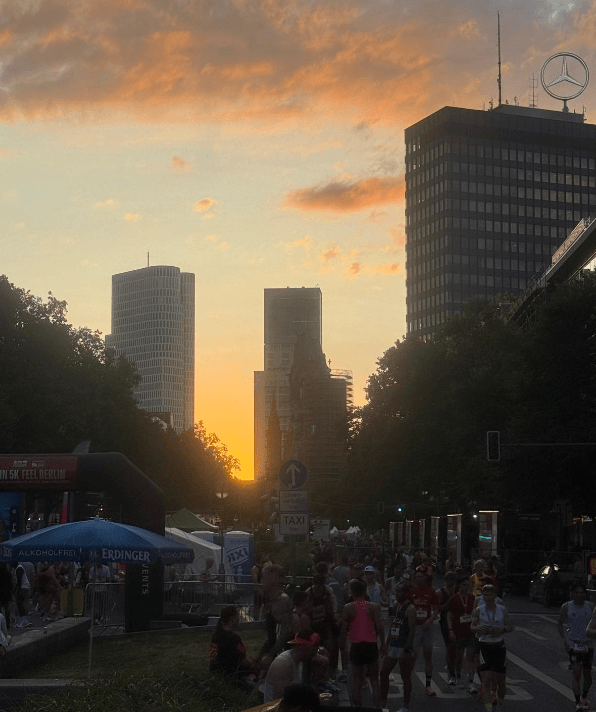
The setup hasn't changed much, because it doesn't need to. Running into dusk rather than daylight gives the race its name, and by the time the 10K field goes off, the sun is close to gone (3). The course itself is flat, out along the Ku'damm and back with a handful of turns, closed to traffic for the night. Samba bands set up on the median. Runners finish through a lit-up gate at the Kaiser Wilhelm Memorial Church, one of the most recognizable landmarks in the city (4). Running clubs from all over Berlin show up to cheer, not just to race, which is part of why the crowd noise doesn't thin out even in the later kilometers the way it does at smaller races.
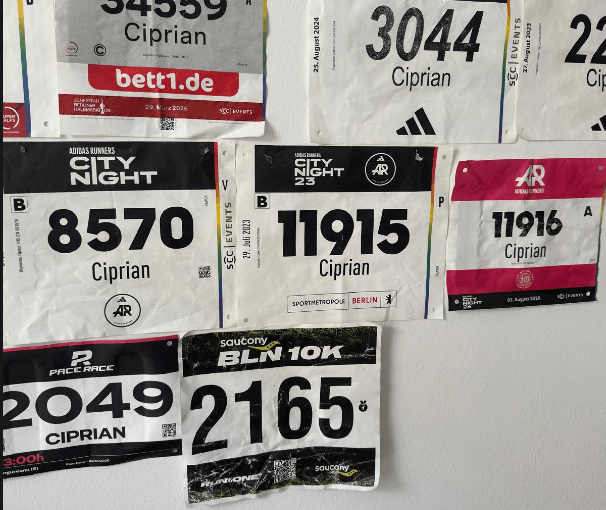
This was my third time running it. First in 2023, then 2024, and now this year, and this was the fastest of the three by a clear margin. I don't think that's a coincidence. It's the same course, the same time of year, roughly the same conditions, which makes it one of the few races I can actually compare year over year and trust the comparison.
The race has also changed hands a few times without losing its identity. It used to run as the Vattenfall City-Nacht before adidas took over the title sponsorship, and it's organized by SCC Events, the same team behind the Berlin Marathon and the Berlin Half. That connection shows on race night. The road closures, the pacing, the finish line production, all of it runs with the same polish you'd expect from an organizer that puts on one of the six World Marathon Majors every autumn.
Three 10K PBs I Never Trained For
Here's the part that still catches me off guard a little. This year I ran three separate 10K personal bests, and not one of them came from a training block built around the 10K.
The first was in March, during the Berlin Half Marathon. I wasn't racing for a fast opening 10K specifically, but I went through the 10K split faster than I ever had at that distance, on the way to a half marathon effort. The second came in June at the Saucony Berlin 10K, a standalone race where I went in fit from marathon training and came out with another PB. And the third was tonight, at Adidas City Night, my first time ever under 36 minutes.
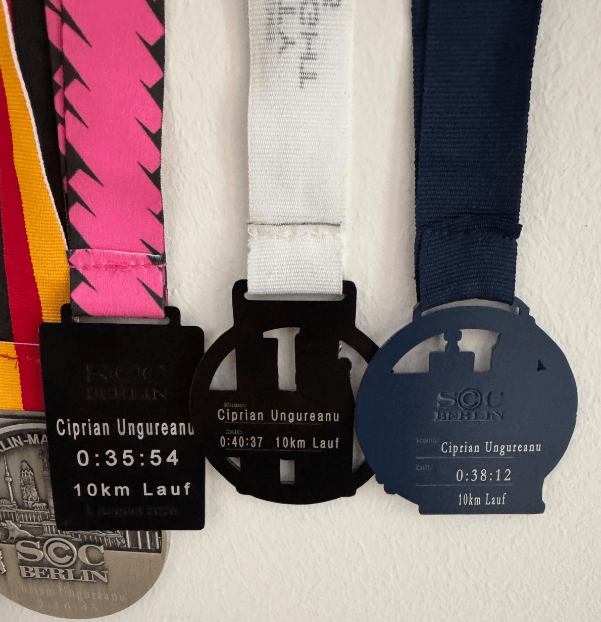
Stack those together, and you get a real progression. Three years ago my 10K time sat around 40 minutes. Tonight it was 35:54. That's not a fluke or a single good day; it's a pattern that's tracked almost exactly alongside my marathon training, not separately from it.
I think what's happening is pretty simple, even if it doesn't feel simple while you're in the middle of a marathon block. The bulk of marathon training is aerobic volume, easy mileage, and long runs, with a smaller dose of marathon-pace work mixed in. None of that is 10K-specific, but it builds the same aerobic engine a 10K depends on. There's actual research behind this. A widely cited study on low-intensity training found that runners who did about half their training at easy effort dropped their average 10K time from 39:24 to 38:00, and runners who pushed low-intensity work up to roughly 73 percent of their training dropped from 39:18 to 37:19, a bigger gain from an even easier approach (5). I'm not running a structured 80/20 plan on purpose, but the marathon buildup ends up looking a lot like one anyway, heavy on aerobic volume, light on hard efforts.
So the 10K speed didn't come from chasing the 10K. It came from getting fitter for something longer and cashing that fitness in on a shorter distance almost by accident.
How the 2026 Adidas City Night Actually Went
Going into the race, I was confident I could hold goal pace for the first six kilometers. Less sure about the last four. The only 10K-specific work I'd done all cycle was a single interval session the Tuesday before, 1K repeats around 3:35 per kilometer, my target race pace. That session was brutal, but it was also close to 30 degrees out that day. Race night was forecast cooler, so I went in trusting the effort would feel different once the heat wasn't working against me too.
The first five kilometers were about as controlled as a hard 10K can feel. On pace, breathing manageable, nothing forced. After that I stopped thinking about the finish line entirely and just aimed for the 7K mark instead, because I knew exactly what came after it: two more turns, then a straight run home. Breaking the second half into landmarks like that made the effort easier to manage than staring down the full remaining distance would have.
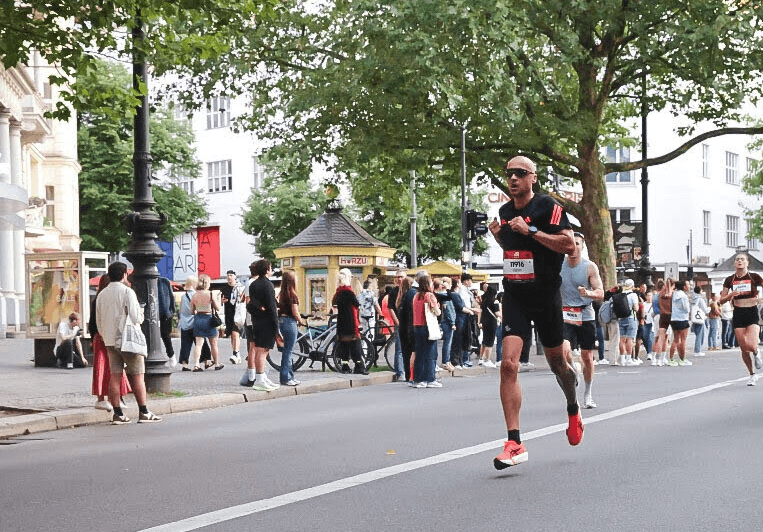
I held the pace through both turns. Then came the final two kilometers, and they stretched on in a way that no GPS watch can really capture. My pace held roughly together, but my form didn't. Everything gets a little sideways in the closing kilometers of a hard 10K, and I expected that going in.
When I crossed the line, the clock read somewhere around 36:05 to 36:10, and I thought I'd missed it by seconds. But I'd started a little behind the gun, so the clock time wasn't my actual time. Once the official chip time came through, it read 35:54. First sub-36 10K of my life. I was genuinely ecstatic standing there at the finish, which isn't something I say often about a race that, on paper, didn't even land me in the top 200.
How to Use This If You're Marathon Training
If you're deep in a marathon block and you feel like your shorter-distance speed is going stale, it's worth checking a recent 10K or 5K split before assuming that's true. The aerobic volume and marathon-pace work in a normal build carries over more than most runners expect, and the research on low-intensity-heavy training backs that up directly (5).
A few things that helped me specifically, if you want to test this yourself:
Don't abandon short, hard efforts entirely during a marathon block. One focused session, like 1K repeats at your goal shorter-race pace, is enough to keep some turnover in your legs without pulling volume away from marathon-specific work.
If you do race a shorter distance mid-block, treat it as a fitness check rather than a separate goal. You're not tapering for it, so don't expect a perfect race, just an honest read on where your speed sits.
Break a hard effort into landmarks instead of racing the full remaining distance in your head. Getting to the next turn is a much easier thing to focus on than "four kilometers left."
Pick a flat, well-organized race for these fitness checks if you can find one. A course like City Night removes hills and navigation as variables, so the time you run is a much cleaner read on your actual fitness than a hillier or less predictable course would give you.